
Winter Weather Guide
Snow & Ice Damage to Sunrooms and Porches: Prevention, Safe Removal, and Why Professional Construction Matters
Maryland Winter Storm Alert
Recent heavy snowfall has tested outdoor structures across the region. Learn how to protect your sunroom, porch, or three-season room—and why construction quality makes all the difference.
The recent winter storm that swept through Maryland left many homeowners with more than just shoveling duties. As inches of heavy, wet snow piled up—followed by a layer of ice—outdoor living structures across Harford, Baltimore, and Cecil Counties faced their toughest test of the season.
Unfortunately, for some homeowners, that test revealed a harsh reality: their sunroom, porch, or three-season room wasn't built to handle what Maryland winters can deliver.
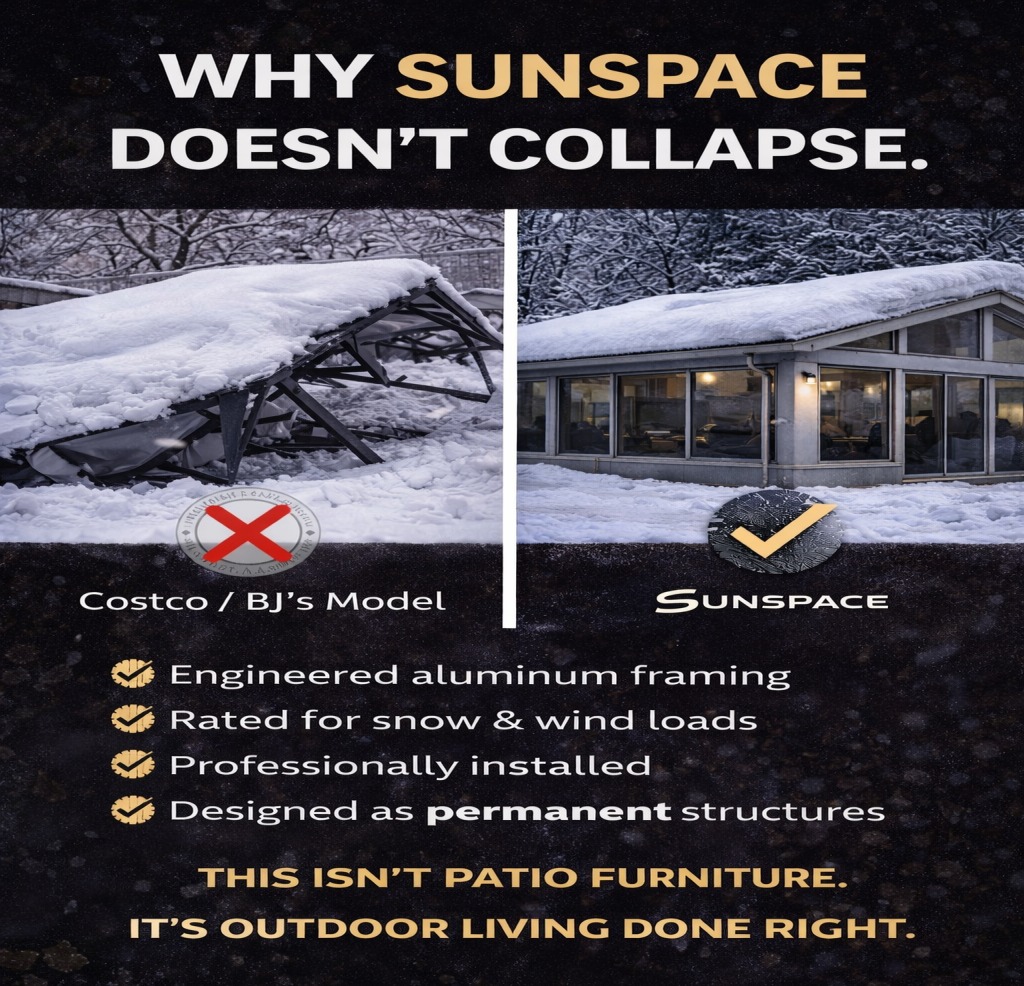
In the days following significant snowfall, calls flood in from homeowners reporting sagging roofs, cracked panels, and in the worst cases, complete structural failures. The common thread connecting these failures isn't the severity of the storm—it's the quality of the original construction.
Structures built to code by licensed professionals handle these weather events without incident. Those built on the cheap, without permits, or by inexperienced installers often don't survive their first real winter challenge.
This guide will help you understand what causes sunroom and porch roof failures, how to safely remove snow and ice from your existing structure, and why professional construction is the only reliable way to prevent these costly and dangerous situations.
Why Sunrooms and Porch Roofs Fail Under Snow and Ice
When a sunroom or porch roof collapses under snow load, the failure isn't sudden—it's the predictable result of construction shortcuts that may have been made years or even decades earlier. Understanding these failure points helps homeowners evaluate their existing structures and make informed decisions about future projects.
Undersized Structural Members
The most common cause of roof failure is framing that's simply too small for the span it covers. Maryland building codes specify minimum sizes for rafters, beams, and headers based on the span, spacing, and expected loads. A 2x6 rafter might be adequate for a 10-foot span, but that same 2x6 over a 14-foot span creates a recipe for failure.
Budget installers frequently use whatever materials are cheapest or most readily available, rather than what engineering requires. The structure might look fine during installation and even hold up for years under normal conditions. But when a heavy, wet snow arrives—the kind that can weigh 20+ pounds per square foot—those undersized members deflect beyond their limits. First comes sagging. Then cracking. Then failure.
Inadequate Load Calculations
Professional sunroom construction begins with engineering calculations that account for dead load (the weight of the structure itself), live load (snow, ice, people during maintenance), wind uplift, and the specific conditions of the installation site. These calculations determine everything from footing sizes to connection hardware.
When these calculations are skipped—as they often are in unpermitted or DIY installations—the resulting structure is essentially a guess. Sometimes that guess is close enough. Often, it isn't.
Poor Connections to the Existing Home
A sunroom or enclosed porch must properly transfer loads to the existing home's structure. This requires a ledger board securely attached to the house framing (not just the siding), proper flashing to prevent water infiltration, and hardware designed to resist both downward and outward forces.
When snow and ice pile up on a roof, they don't just push down—they also push out. A poorly attached structure can separate from the house entirely, often taking siding, trim, and even sections of the home's exterior sheathing with it.
Insufficient Roof Pitch
Roof pitch—the angle of the roof surface—directly affects how snow and ice behave. A steeper pitch allows snow to slide off naturally, reducing accumulated weight. A low-pitch or nearly flat roof holds snow in place, allowing it to pile up storm after storm and compact into ice.
Many budget sunroom kits feature minimal roof pitch to reduce material costs and simplify installation. While this might work in southern climates, it's inadequate for Maryland's winter conditions.
Material Degradation Over Time
Even structures that were adequately built originally can fail if materials have degraded over time. Wooden members can rot, especially where water infiltration has occurred. Aluminum connections can corrode. Fasteners can rust and lose holding power. Sealants fail, allowing water into joints where it freezes, expands, and forces connections apart.
This is why regular inspection and maintenance matter—and why the quality of original materials and installation techniques makes such a difference in long-term durability.
Warning Signs Your Structure Is Under Stress
During and after heavy snowfall, watch for these indicators that your sunroom, porch, or three-season room may be experiencing dangerous stress levels:
The most obvious sign of overload. Stand back and view your roof from a distance. Any visible dip, bow, or unevenness indicates the structure is carrying more weight than it should.
Creaking, popping, or cracking suggest structural members are being stressed beyond their limits. These sounds often precede failure and should be taken seriously.
This indicates the frame is racking or deforming. This happens when loads shift the structure out of square.
Shows that excessive pressure is being transferred through the structure. These panels should have some float in their frames—if they're cracking, the frame itself is distorting.
Indicates that connections have moved or separated, breaking seals that normally keep water out.
CRITICAL SAFETY ALERT
If you observe any of these warning signs, evacuate the area immediately. Do not attempt to remove snow yourself if the structure shows signs of imminent failure. Contact a professional to assess the situation safely.
How to Safely Remove Snow and Ice from Your Sunroom or Porch
If your structure appears stable and shows no warning signs of stress, you can take steps to remove accumulated snow and ice. The key principles are: work from the ground, use the right tools, and never rush the process.
Essential Safety Rules
Never climb onto the roof. Sunroom and porch roofs are not designed to support the weight of a person, particularly when already loaded with snow.
Avoid working directly under the roof edge. As you remove snow, sections may slide off suddenly. Stand to the side when possible.
Wear appropriate safety gear. Safety glasses protect against ice chips. Non-slip footwear provides traction on icy ground.
Recommended Tools
Purpose-built roof rakes allow you to pull snow off the roof while standing safely on the ground. Look for models with rollers or bumpers that prevent the blade from scratching roofing materials.
For structures you can reach, a soft broom on an extension pole works well for pushing light snow without damaging panels. Never use metal shovels, ice choppers, or tools with hard edges.
Unlike rock salt, calcium chloride won't damage aluminum frames, painted surfaces, or surrounding vegetation. Apply it in mesh tubes or old stockings laid across ice dams to create channels for meltwater.
Step-by-Step Snow Removal Process
Assess Before Acting
Walk around the structure and look for warning signs. Check snow depth—if accumulation exceeds 12 inches or includes a significant ice layer, consider calling a professional instead.
Start at the Edges
Begin removing snow from the lowest, most accessible edges of the roof. Work your way up gradually, allowing the structure to shed weight progressively rather than all at once.
Work in Layers
Don't try to remove all the snow in one pass. Take off the top few inches, let the structure settle, then remove more. This gradual approach reduces stress on the framing.
Address Ice Carefully
Never chip at ice with sharp tools—you'll damage roofing materials and potentially crack panels. Instead, lay calcium chloride-filled tubes across ice dams. The melt channels will form over several hours.
Clear Drainage Paths
Once snow is removed, ensure gutters, downspouts, and any drainage channels are clear. Blocked drainage causes meltwater to pool, refreeze, and add weight back to the structure.
When to Call a Professional
Some situations require professional help rather than DIY approaches. Call an experienced contractor if:
- Your roof shows any warning signs of stress
- Snow depth exceeds 12 inches with significant ice underneath
- You cannot safely reach the roof with ground-based tools
- The structure has a history of problems during winter weather
- You're unsure about the structure's ability to handle the load
How Professional Construction Prevents Winter Weather Failures
The difference between a sunroom that handles Maryland winters without incident and one that fails under the first significant snow load comes down to how it was designed and built. Professional construction addresses every factor that contributes to winter weather performance.
Proper Engineering and Load Calculations
Licensed contractors don't guess about structural requirements—they calculate them. Before construction begins, engineers determine the snow loads your structure must handle based on local building codes (which account for historical snowfall data), the specific span and configuration of your project, and safety factors that provide margin for exceptional storms. The result is a structure with documented capacity to handle what Maryland weather delivers, plus a safety margin for the unexpected.
Quality Materials Specified for the Application
Professional builders source materials based on engineering requirements, not just price. This means structural lumber graded and sized for the loads it will carry, aluminum framing systems engineered for specific spans and loads, connection hardware rated for the forces it must resist, and roofing materials appropriate for the roof pitch and climate. When you work with an authorized dealer—such as a Sunspace-certified installer—you're getting a system that's been engineered as a complete package.
Permit Process and Inspections
The permit and inspection process exists specifically to catch construction deficiencies before they become dangerous. When you pull a permit for a sunroom or porch addition, the county reviews plans to verify structural adequacy, inspectors visit during construction to verify work matches plans, and final inspection confirms the completed structure meets code. This process creates accountability at every stage—and unpermitted work skips this entire safeguard.
Proper Roof Design for Snow Shedding
Experienced contractors design roofs that work with Maryland's climate, not against it. This includes appropriate roof pitch to encourage natural snow shedding, smooth roofing surfaces that don't trap snow, proper drainage systems sized for meltwater volume, and heating options for areas prone to ice dam formation. A well-designed roof does much of the work automatically—snow slides off before it accumulates to dangerous levels.
Robust Connections to the Existing Home
How a sunroom connects to your home determines whether loads transfer safely or create points of failure. Professional installation includes ledger boards attached to house framing with proper fasteners, flashing systems that prevent water infiltration, hardware rated for both gravity loads and lateral forces, and transitions that accommodate building movement without breaking seals. These connections are often invisible once the project is complete—but they're among the most critical elements.
Warranty Protection and Long-Term Support
Professional installation typically includes both manufacturer warranties on materials and contractor warranties on workmanship. If problems develop, you have recourse. Try getting warranty service on an unpermitted structure built by someone who's since gone out of business—it doesn't happen. Established contractors also provide ongoing support: maintenance recommendations, periodic inspections, and prompt response when issues arise.
What to Look for in a Sunroom Contractor
If the recent weather has you concerned about your existing structure—or thinking about a new sunroom built to last—here are the credentials that indicate a contractor takes structural integrity seriously:
Maryland requires home improvement contractors to be licensed. Verify the license is current and check for complaints with the Maryland Attorney General's office.
Authorized dealers (such as Sunspace dealers or Trex Pro Platinum contractors) have completed training and demonstrated competency with specific product systems.
Ask whether the contractor pulls permits for their projects. A contractor who avoids permits is telling you something about their work quality and accountability.
Verify both liability insurance and workers' compensation coverage. Ask for certificates—reputable contractors provide them readily.
A contractor with deep roots in your community has a reputation to protect. Ask to see completed projects and speak with previous customers.
Concerned About Your Sunroom or Porch?
Whether you need an assessment of an existing structure or want to discuss building a new outdoor living space engineered for Maryland's climate, we're here to help.
Protecting Your Investment Through Every Season
Maryland's winters test outdoor living structures in ways that summer never will. The weight of wet snow, the expansion of freezing water in joints and seams, the stress of repeated freeze-thaw cycles—these forces reveal the difference between structures built to last and those built to a price point.
If you're currently dealing with snow and ice on your sunroom or porch, take the safe approach: use ground-based tools, work gradually, and don't hesitate to call for professional help if you have any concerns about structural integrity.
And if this winter has you thinking about the future—whether that means reinforcing an existing structure or building a new one that's engineered for Maryland's climate—remember that the choices made during construction determine how well that structure performs for decades to come.
Professional construction, proper permitting, and quality materials aren't just checkboxes. They're the foundation of an outdoor living space you can enjoy confidently, season after season, regardless of what the weather brings.