
Understanding your options for extending the comfort of your three-season room into colder months—and when a different approach might serve you better.
If you have a three-season room, you've probably wondered whether you could heat it during winter to get more use out of the space. It's a natural question, especially here in Maryland where our winters can be unpredictable—sometimes mild enough to enjoy outdoor spaces, other times cold enough to keep everyone inside for weeks.
The short answer is yes, you can add heating to a three-season room. The more complete answer involves understanding what that actually means in terms of comfort, energy costs, and whether it makes sense for how you want to use the space.
This guide will walk you through the practical realities of heating a three-season room, the options available to you, and help you determine whether supplemental heating or a different solution is the right choice for your situation.
Understanding How Three-Season Rooms Are Built
Before exploring heating options, it helps to understand why three-season rooms behave differently than the rest of your home when temperatures drop. The design choices that make these rooms wonderful during spring, summer, and fall are the same ones that create challenges in winter.
Three-season rooms are intentionally designed to connect you with the outdoors. They typically feature large window areas with single-pane or lightly insulated glazing, aluminum or vinyl frames without thermal breaks, and minimal wall insulation. The roof structure may have less insulation than your home's main roof, and the floor might be directly over an unconditioned crawl space or concrete slab.
This construction approach serves an important purpose. During warmer months, the room stays bright and airy, temperatures remain pleasant even on warm days when windows are open, and you feel immersed in your outdoor surroundings. The room isn't trying to compete with outdoor conditions—it's designed to complement them while providing protection from insects, rain, and direct sun.
When winter arrives, those same design characteristics work against you. Heat escapes quickly through the large glass areas and less-insulated walls. Cold air infiltrates through gaps that don't matter when it's 70 degrees outside but become noticeable at 30 degrees. Any heat you add has to work much harder to maintain comfortable temperatures than it would in a fully insulated space.
Heating Options for Three-Season Rooms
Several heating approaches can make a three-season room more usable during colder months. Each has distinct advantages and limitations, and the right choice depends on how you plan to use the space and what you're willing to invest in both equipment and ongoing energy costs.
Portable Electric Heaters
Portable electric heaters are the most accessible option. You can purchase one for anywhere from $30 to $300 depending on features and quality, plug it in, and have immediate heat. Modern units include safety features like tip-over protection and overheat shutoffs.
For occasional use on milder winter days—say when it's 40 to 50 degrees outside and you want to enjoy morning coffee in the sunroom—a good portable heater can make the space comfortable. You'll want to choose a unit appropriately sized for your room (typically 10 watts per square foot as a starting point), and be prepared to run it for 20-30 minutes before the space feels warm.
The limitation is efficiency. Because the room loses heat quickly, the heater runs constantly to maintain temperature. On colder days, a single portable heater may not be able to keep up at all. Energy costs add up quickly when you're essentially heating a poorly insulated box.
Infrared Heaters
Infrared heaters work differently than conventional heaters. Instead of warming the air, they emit infrared radiation that heats objects and people directly—similar to how sunlight warms you even on a cool day. This approach offers some advantages in a three-season room.
Because infrared heaters warm you rather than the air, you can feel comfortable even when the ambient air temperature remains relatively cool. Heat isn't lost as quickly through the windows and walls because you're not trying to maintain warm air throughout the space. Many people find infrared heat feels more natural and comfortable than forced air.
Infrared heaters come in portable and wall-mounted versions. Ceiling-mounted panels are also available and work well in sunrooms since they direct heat downward toward the seating area. Costs range from $100 for basic portable units to $500 or more for installed panel systems.
Ductless Mini-Split Systems
If you want more serious heating capability—and the bonus of air conditioning for summer—a ductless mini-split system is worth considering. These systems include an outdoor compressor unit connected to an indoor air handler, providing both heating and cooling without ductwork.
Mini-splits are significantly more efficient than portable electric heaters. Modern units can operate at 300% efficiency or better, meaning they move more heat energy into your room than they consume in electricity. This efficiency advantage becomes meaningful if you plan to heat the room frequently.
The tradeoff is upfront cost. Expect to pay $3,000 to $7,000 for a properly installed mini-split system, depending on the unit's capacity and installation complexity. You'll also need an electrician to add a dedicated circuit if one doesn't exist.
One important note: mini-split systems in three-season rooms function as independent heating and cooling—they're not connected to your home's main HVAC system. This is actually the appropriate approach since three-season room construction doesn't support integration with whole-house climate control.
Electric Baseboard or Wall Heaters
Permanently installed electric heaters offer a middle ground between portable units and mini-splits. Baseboard heaters along exterior walls or wall-mounted convection heaters provide consistent heat without taking up floor space.
Installation costs typically run $500 to $1,500 depending on the size of the room and electrical work required. Operating efficiency is similar to portable electric heaters—you're converting electricity directly to heat at essentially 100% efficiency, which is less efficient than heat pump technology but simpler and more reliable.
This option makes sense if you want a permanent, unobtrusive heating solution but don't want to invest in a full mini-split system.
Why You Shouldn't Connect to Your Home's HVAC
A common question homeowners ask is whether they can simply extend their existing heating system into the three-season room. In almost every case, this is not recommended, and there are good reasons why.
Your home's HVAC system was sized to heat and cool your existing conditioned space. Adding a three-season room—which loses heat far faster than insulated living space—places a significant additional load on the system. The furnace or heat pump has to work much harder, running longer cycles and consuming more energy just to maintain temperature in the sunroom.
This extra burden often compromises comfort throughout your home. The system may struggle to maintain temperature in other rooms while trying to satisfy the thermostat's demands for the sunroom. You might find yourself constantly adjusting temperatures or closing vents to balance the load.
There are also potential code and insurance implications. Building codes in Maryland typically require additions to meet specific insulation and energy standards if they're connected to whole-house mechanical systems. A three-season room generally doesn't meet these requirements, which could create permitting issues or affect your homeowner's insurance coverage.
Independent heating systems avoid all of these problems. You heat the sunroom only when you're using it, your home's HVAC continues operating normally, and you maintain clear separation between conditioned and semi-conditioned spaces.
Maryland Winter Realities
Living in Harford, Baltimore, or Cecil County, you know our winters are variable. Some years bring extended cold stretches with temperatures in the 20s and 30s for weeks. Other years feel almost mild, with many days in the 40s and 50s punctuated by occasional cold snaps.
This variability actually affects how practical it is to heat a three-season room. On those milder winter days—when it's 45 degrees and sunny—a heated three-season room can be genuinely pleasant. The sun streaming through the windows provides passive solar heating, and a moderate heating source can easily maintain comfortable temperatures. You might get 10 to 20 days per winter month when conditions are favorable.
During cold stretches, the calculation changes. When it's 25 degrees outside and overcast, even a robust heating system struggles to maintain comfortable temperatures in a space with single-pane windows and minimal insulation. You'll spend significant energy to achieve marginal comfort, and the room may still feel drafty near the windows.
How you plan to use the space matters here. If your goal is occasional enjoyment on pleasant winter days—morning coffee, reading on a Sunday afternoon—supplemental heating can work well. If you want a space that's consistently comfortable regardless of outdoor conditions, you're likely to be disappointed with a heated three-season room.
What Will It Cost to Heat?
Energy costs for heating a three-season room vary widely based on the heating method, room size, how often you use the space, and outdoor temperatures. Here's a realistic framework for thinking about costs.
A typical three-season room might be 150 to 250 square feet. To maintain reasonable comfort using portable electric heaters on a moderately cold day (35-40°F outside), you might run a 1,500-watt heater for several hours. At Maryland's average electricity rate of around $0.13 per kilowatt-hour, that's roughly $0.20 per hour of operation, or about $4-6 per day if you're using the room for extended periods.
Over a winter month with regular use, electric heating costs could add $50 to $150 to your utility bills depending on usage patterns. During cold stretches when you'd need multiple heaters or extended run times, costs climb toward the higher end.
A mini-split system, despite higher upfront costs, operates more efficiently. The same heating task might cost 50-60% less to operate compared to resistive electric heat. If you plan to heat the room frequently over multiple winters, the energy savings can offset the installation cost over time.
It's worth noting that these costs would be significantly lower in a properly insulated four-season room. The energy required to maintain temperature in an insulated space might be one-third to one-half what you'd spend heating a three-season room to the same temperature. This efficiency difference becomes the primary financial argument for choosing a four-season room if year-round use is your goal.
When a Four-Season Sunroom Is the Better Choice
If you're reading this article because you want comfortable year-round use of a sunroom space, it's worth considering whether a four-season sunroom might better serve your needs. The upfront investment is higher, but the ongoing experience is substantially different.
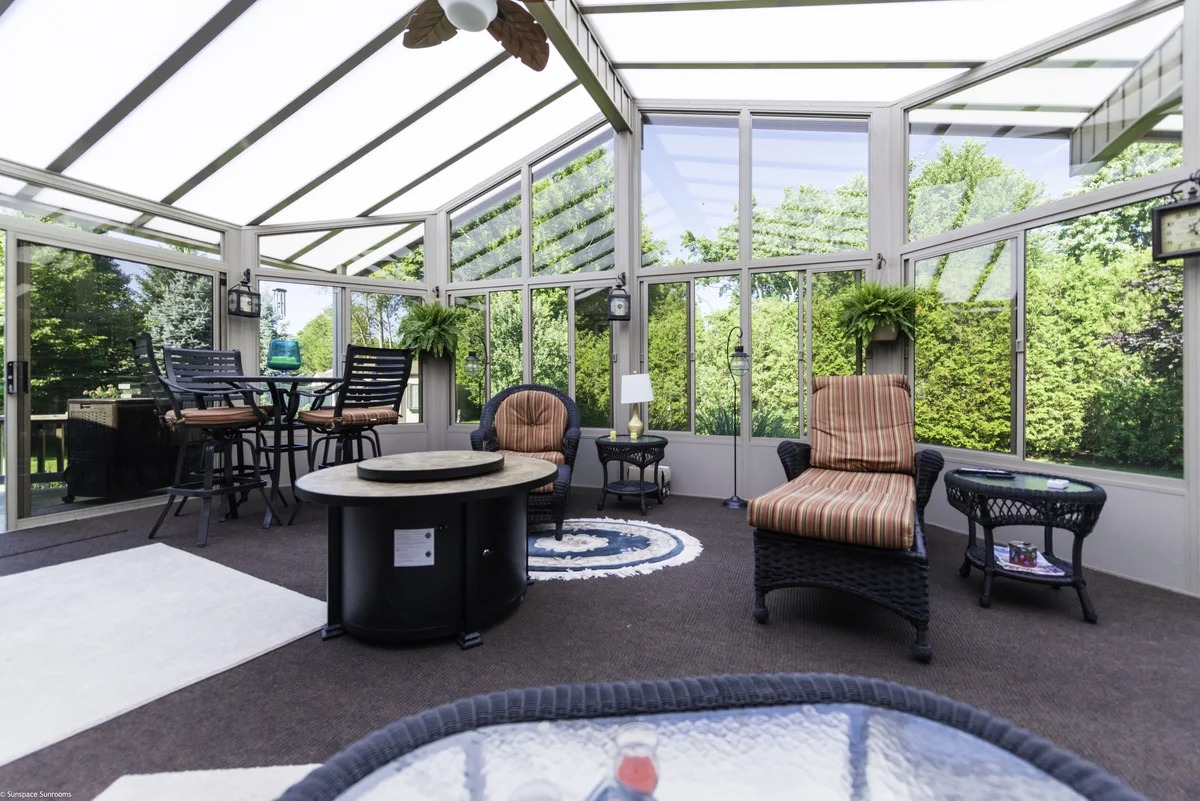
Four-season sunrooms are built with insulated frames, double or triple-pane glazing with low-E coatings, proper weathersealing, and insulated roof and floor assemblies. These construction features dramatically reduce heat loss, making the space comfortable to heat even during Maryland's coldest weather.
With a four-season room, you can maintain consistent temperatures without excessive energy costs. A properly designed four-season space with an appropriate heating system—often a ductless mini-split—stays comfortable regardless of outdoor conditions. You gain true year-round living space rather than an extended-season compromise.
The cost difference between a three-season room with supplemental heating and a four-season sunroom might be $10,000 to $25,000 depending on size and specifications. But when you factor in ongoing energy savings and the value of usable space throughout winter—not just on mild days—the four-season option often proves more cost-effective over the life of the room.
Consider your intended use carefully. A three-season room with supplemental heating works well for homeowners who primarily want spring, summer, and fall enjoyment with occasional winter use on nice days. A four-season sunroom is the right choice when you want consistent, comfortable use throughout the year without compromise.
Making the Most of a Heated Three-Season Room
If you decide to add heating to your three-season room, a few strategies can improve your comfort and efficiency.
Pre-heat the space before you plan to use it. Running your heating source for 20-30 minutes before you settle in allows the room and its furnishings to warm up. Sitting on a warm chair in a warm room feels much more comfortable than entering a cold space and waiting for it to catch up.
Take advantage of sunny days. Even in winter, solar gain through large windows can significantly warm a sunroom. Open blinds during sunny periods to capture free heat, then use supplemental heating to maintain comfort as the sun moves or sets.
Use area rugs on hard floors. Cold floors sap heat from your feet and make the whole room feel cooler. Rugs add insulation and make the space feel warmer even at the same air temperature.
Consider thermal curtains for evenings or cloudy days. Heavy curtains over windows reduce heat loss and block cold drafts. They're easy to open when you want the view and sunlight, then close them to retain heat.
Seal obvious air leaks. While a three-season room won't match the airtightness of your home, addressing obvious gaps around windows, doors, and where the room meets your house can reduce drafts and heat loss noticeably.
Manage expectations on the coldest days. When temperatures drop into the 20s or below, accept that your three-season room may not reach full comfort regardless of heating effort. Enjoy it on mild winter days and save serious cold-weather living for inside your home.
Making Your Decision
Can you heat a three-season room? Yes. Should you? That depends entirely on what you're hoping to achieve.
For extending enjoyment into late fall and early spring, or for comfortable use on mild winter days, supplemental heating is a reasonable approach. A good portable heater or infrared panel can make your three-season room pleasant for morning coffee on a 45-degree January day, and that might be exactly what you're looking for.
For consistent year-round comfort regardless of outdoor conditions, a heated three-season room will likely disappoint. The energy costs and comfort limitations make it a compromise rather than a solution. In this case, investing in a four-season sunroom—either as a new build or a conversion if feasible—delivers the experience you're actually seeking.
Whatever direction you choose, understanding the realities of how these spaces perform helps you make a decision you'll be satisfied with for years to come.
Frequently Asked Questions
Can you heat a three-season room in winter?
Yes, you can add supplemental heating using portable electric heaters, infrared heaters, or ductless mini-split systems. However, three-season rooms aren't designed for year-round climate control and will be significantly less energy-efficient than a properly insulated four-season sunroom during Maryland winters.
What is the best heater for a three-season room?
For occasional winter use, portable electric heaters or infrared heaters work well. For more regular use, a ductless mini-split system provides efficient heating and cooling. The best choice depends on how often you plan to use the room during cold months and your budget for equipment and ongoing energy costs.
Why can't you connect a three-season room to your home's HVAC?
Three-season rooms typically lack the insulation, weatherproofing, and thermal efficiency required for HVAC integration. Connecting to your home's system would force the HVAC to work much harder, increasing energy costs and potentially straining equipment. Independent heating systems are the appropriate solution for these spaces.
What temperature can a heated three-season room maintain in winter?
This depends on outdoor temperature, the heating source, and the room's construction. On mild winter days (40-50°F outside), you may achieve comfortable temperatures. During Maryland's coldest stretches (below freezing), even with heating, the room may only reach 50-60°F and will require significant energy to maintain.
Is it worth heating a three-season room or should I get a four-season sunroom?
If you only need occasional winter use on milder days, heating a three-season room can work. If you want comfortable, year-round use regardless of outdoor temperatures, a four-season sunroom with proper insulation and dedicated climate control is the better investment. The higher upfront cost is offset by lower energy bills and more usable months per year.
How much does it cost to heat a three-season room in Maryland?
Operating costs vary based on heating method, room size, outdoor temperatures, and usage frequency. A portable space heater running several hours daily during winter months might add $50-150 per month to electric bills. A mini-split system is more efficient but has higher upfront costs ($3,000-$7,000 installed). Energy costs in a three-season room will always be higher than in a properly insulated four-season space.
Can I use a propane heater in my three-season room?
While propane heaters provide strong heat output, they require proper ventilation due to carbon monoxide concerns. Many three-season rooms have adequate ventilation, but you must ensure yours does before using any combustion-based heater. Electric heating options are generally safer for enclosed spaces.
Will heating a three-season room damage the structure?
Generally, no. However, creating large temperature differentials between the heated interior and cold exterior can lead to condensation on windows and frames. Over time, excessive moisture can cause issues. Using moderate heat levels and ensuring some air circulation helps prevent condensation problems.
What's the difference between a three-season room and a four-season sunroom?
Three-season rooms are designed for spring, summer, and fall use with single-pane or minimal glazing and limited insulation. Four-season sunrooms feature insulated frames, double or triple-pane glass, proper weathersealing, and are built to integrate with or support dedicated heating and cooling systems for year-round comfort.
Can I convert my three-season room to a four-season room?
In some cases, yes, but it often involves significant modifications including upgraded glazing, added insulation, weathersealing, and potentially structural changes. The cost can approach or exceed building a new four-season room. A professional assessment is needed to determine feasibility for your specific structure.
Questions About Sunrooms or Three-Season Rooms?
Whether you're exploring heating options for an existing room or considering a new sunroom for your Maryland home, we're happy to help you think through your options.
Start a Conversation