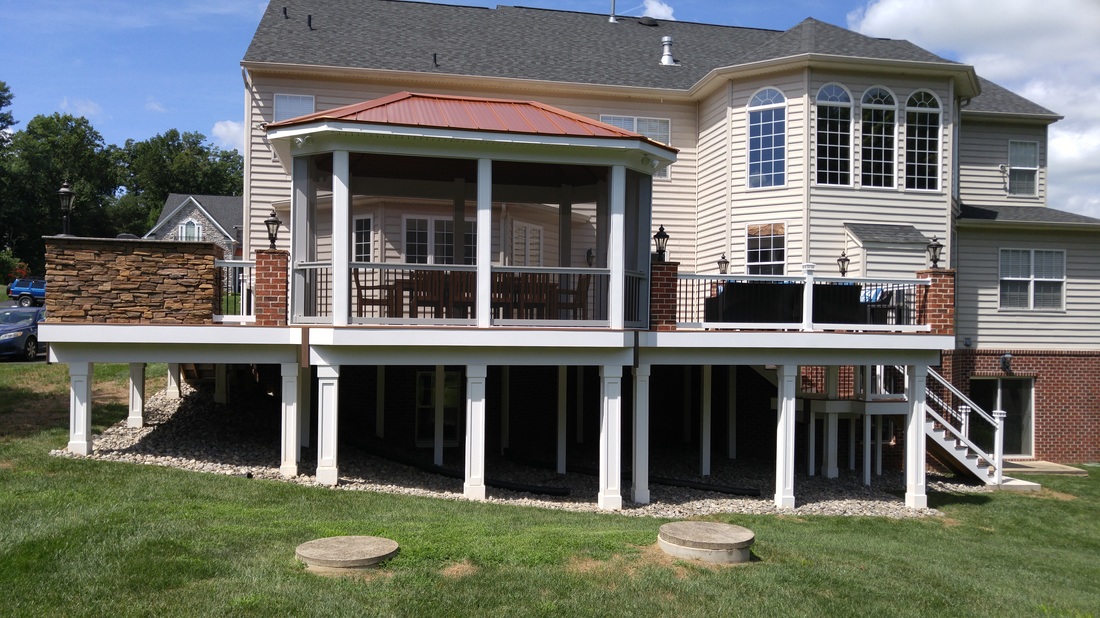
Three Season Room
Three-Season Rooms in Maryland: Benefits, Year-Round Use, and Who They're Right For
Reviewed by Mark Szabo, owner, Custom Design & BuildEditorial policy
March 5, 2025
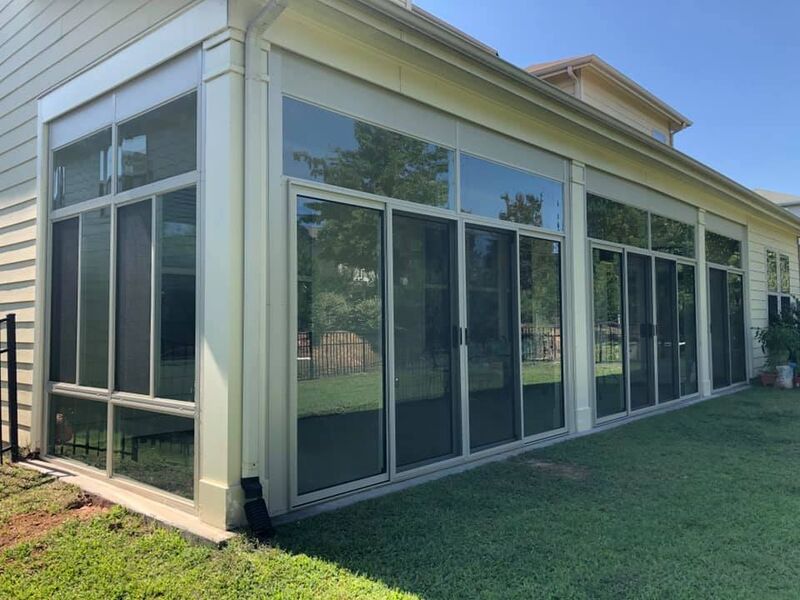
A three-season room gives Maryland homeowners a bright, bug-free, weather-protected room they can use comfortably from spring through fall, for much less than a four-season room or a traditional addition. It is the most popular room we build, and for good reason: it fits the way Central Maryland weather actually behaves. It is also not a year-round room, and we would rather tell you that up front. This guide covers the real benefits, how many months most people use one, what winter use looks like, why so many Harford County and Central Maryland homeowners add them, the Sunspace models and their prices, and when a four-season room is the better choice.
What a three-season room is
A three-season room is a roofed room with operable windows that close against rain, wind, and bugs and open for a breeze. It is not insulated, and it does not have its own heating and cooling system. That simpler construction is what makes it more affordable than a four-season room, and it is also what limits it in deep winter.
We build three-season rooms with two Sunspace models:
- Model 200 WeatherMaster: vertical 4-track vinyl windows that open up to 75 percent for ventilation and close tight against weather and bugs. This is our most popular room.
- Model 300: a bright glass room on an extruded aluminum frame, with single-glazed glass and double-roller windows that vent from both sides.
Both are modular and custom-built to your home, and both can be installed on an existing deck, on a patio, or under an existing roof. If you are still sorting out the difference between a screen room, a three-season room, and a four-season room, start with our sunroom vs three-season vs screen room comparison.
The benefits of a three-season room
More usable space without a full addition
A three-season room adds real, furnished living space without the cost and complexity of a full home addition. People use them as a morning coffee spot, a dining room for warm evenings, a reading nook, a play area for the kids, a yoga or exercise space, an art room, or a place for weekend brunch with friends. Because a Sunspace room can go on an existing deck or patio, you are often building on something you already have. Before we do, we confirm the deck structure can carry the load.
Maryland's best seasons without the worst parts
Central Maryland gives you a bit of everything: brisk mornings that turn into warm afternoons, humid summers, sudden thunderstorms, heavy spring pollen, and mosquitoes that thrive near the Bay and its tidal creeks. A three-season room lets you feel the spring breeze without the yellow film of pollen on everything, enjoy a summer evening without swatting bugs, and watch the fall colors without needing bug spray. When a storm rolls in, you close the windows and stay put.
Ventilation when you want it
The Model 200's 4-track vinyl windows open up to 75 percent of the opening, so on a warm day the room breathes almost like a screen room. The Model 300's double-roller windows vent from both sides. You choose how open or closed the room is from one hour to the next, which a screen room or a sealed addition cannot do.
Natural light
Walls of windows bring in far more daylight than a typical room. Many people simply feel better in a bright space, and on a sunny spring or fall day a three-season room warms up nicely on sunlight alone. Roof style shapes the light too, and our guide to sunroom roof options walks through the choices.
Less outdoor upkeep
An open patio means wiping down furniture after every rain, hauling cushions in and out, and sweeping up leaves and debris. Close the windows of a three-season room and the dirt, debris, and bugs stay out. You can use comfortable, indoor-style furniture, and the seasonal shuffle mostly goes away. The room itself needs only light care: keep the window tracks clean, check weather stripping and seals, and clean vinyl gently with no harsh cleaners, detergents, or bleach.
More privacy than a screen room
Screens do little to block the view from a neighbor's yard or the street. Windows, especially tinted vinyl, give you more of a sense of a room of your own.
Home appeal
Buyers like bright, extra living space that connects to the outdoors, and a well-built three-season room stands out in a listing. How much it adds to a particular home depends on the house, the neighborhood, and the quality of the work, so we do not promise a resale figure. A four-season room generally counts as more finished living space than a three-season room. Our article on how a three-season room can increase your home's value in Maryland goes deeper.
Strong warranty coverage
Sunspace backs its rooms with a non-prorated limited lifetime warranty for the original purchaser. It covers laminations and finishes, window and door glass breakage, vinyl extruded components, hardware, and screen units for life, and vinyl glazed windows for 10 years against fading and cracking when you follow the cleaning instructions. We add a 2-year workmanship warranty on our installation and register the manufacturer warranties for you. The warranty does not cover site conditions, work by others, or non-Sunspace materials.
How many months can you really use one in Maryland?
The honest answer is most of the year, with a break in the coldest stretch. Here is how a typical year looks in Central Maryland:
- Spring (roughly March through May): the room comes into its own. Sunny days warm it up, the windows keep out wind and pollen, and you open them as the weather warms.
- Summer (June through August): open the windows and run a ceiling fan. On the hottest, most humid afternoons it will be warm, just as any space without air conditioning is. Mornings and evenings are the sweet spot.
- Fall (September through November): often the best season of all. Close the windows on cool evenings and enjoy the colors without bugs.
- Winter (December through February): usable on sunny, milder days, especially with a heater. On cold, gray, windy days most people leave it closed.
Plenty of homeowners use their room from March into November, plus a scattering of mild winter afternoons. How far you stretch that depends on orientation (a south-facing room gathers more winter sun), your roof choice, and how much cold you are willing to put up with.
Using a three-season room in winter
Can you sit in a three-season room in January? On a sunny day, yes, and it can be surprisingly pleasant. On a cold, gray day, you will need a heater. The walls and windows are not insulated, so heat you add escapes, and the room cools quickly once the heater is off. Having coffee out there on an early December morning or hosting a small get-together in late February is realistic. Using it as an everyday room through a Maryland January is not.
A portable or wall-mounted electric heater is the common answer for occasional cold-weather use. If you want to go further, there are real limits and costs to weigh, including electrical capacity and how much heat an uninsulated room can hold. Rather than repeat it here, we cover the options in detail in can you heat a three-season room.
Snow is the other winter consideration. Every room we build is engineered and permitted for our snow loads. After a heavy storm, clear snow gently from the ground with a soft roof rake rather than climbing on the roof or chipping at ice.
Why Harford County and Central Maryland homeowners add them
We build three-season rooms across Harford, Baltimore, Cecil, Anne Arundel, and Howard County, and from our home base in Fallston we hear the same reasons again and again:
- The weather swings. A day can start brisk and end warm. A room you can open and close keeps up with that.
- They already have a deck or patio. Building on an existing outdoor space is a natural next step, and a Sunspace room is designed for it.
- Bugs and pollen. Near the Bay, along creeks, and in wooded lots, mosquitoes make open decks hard to use in summer.
- Value for the money. They want a real room, not just a covered patio, without paying for a full addition or a four-season room.
- A place to slow down. Many people tell us it becomes the room where the family actually spends time together.
Local rules are part of the picture too. Every sunroom we build is permitted and inspected; we pull the permit, prepare the paperwork, meet the inspector, and handle HOA or architectural review when it applies. In Harford County that includes Critical Area review near the water, such as along the Havre de Grace waterfront. In Howard County, most Columbia villages require Columbia Association architectural review alongside the county permit. For Harford-specific steps, see our Harford County permit and zoning checklist.
Choosing a model: Model 200 vs Model 300
Both models give you a three-season room. The difference is the windows.
Model 200 WeatherMaster uses vinyl windows that open up to 75 percent. Choose it if ventilation matters most to you and you want the room to feel close to open air on warm days. It is the most popular room we build and the lower-cost option. Keep in mind that vinyl is not glass: it is clear and durable when cleaned correctly, but it does not look exactly like glass. Learn more on our WeatherMaster sunroom page.
Model 300 uses single-glazed glass with double-roller windows that vent from both sides. Choose it if you want the clarity and traditional look of glass and do not need as much open area. It costs a little more than the Model 200 at each size.
| Size | Model 200 WeatherMaster | Model 300 glass |
|---|---|---|
| 12x12 (144 sf) | $38,000 to $50,000 | $42,000 to $55,000 |
| 12x14 (168 sf) | $40,000 to $55,000 | $45,000 to $60,000 |
| 14x16 (224 sf) | $52,000 to $65,000 | $55,000 to $68,000 |
| 16x20 (320 sf) | $65,000 to $80,000 | $68,000 to $85,000 |
These are typical ranges for a complete room with roof and walls. Integrated railings add $2,500 to $5,000. If you already have a covered porch, a WeatherMaster 4-track enclosure under the existing roof typically runs $22,000 to $55,000. Try our pricing calculator for your size, read the full Maryland sunroom cost guide, or ask about financing with terms up to 15 years. Your final number comes in our written proposal.
When a four-season room is the better fit
A three-season room is the right call for most of the homeowners we talk to. It is not the right call for everyone. A Sunspace Model 400 four-season room is the better choice if:
- You want to use the room every day, including the coldest weeks of winter
- It will be a home office, family room, or TV room that needs to stay comfortable
- You want it to feel like a true addition to the house
The Model 400 has thermal walls, Low-E argon glass, thermal breaks in the frame, and an optional insulated floor. It runs on its own heating and cooling, such as a ductless mini-split; we do not tie sunrooms into the home's existing HVAC. It typically costs roughly $35,000 to $40,000 more than a Model 200 of the same size.
If you already know you want year-round use, build the four-season room from the start. A three-season room does not practically become a four-season room later, because the insulation and thermal glass are built into the Model 400's frame and walls. Our four-season room guide covers insulation, heating and cooling, and cost.
Why the builder matters
A three-season room is only as good as what is under it and how it ties into the house. We are an authorized Sunspace dealer and the builder, with our own crews and no subcontracted installs. One company is responsible for the footing or slab, the structure, the roof tie-in, the enclosure, electrical coordination, and finish work. We have been building for more than 30 years. Whoever you hire, confirm the license, insurance, and permit plan before you sign. Our MHIC license number is 91686.
Let's talk about your outdoor space
Every three-season room we build starts the same way:
- A free phone conversation. Tell us how you want to use the room. We give you a price bracket on that first call.
- A one-hour site visit. We look at your deck, patio, or porch and bring samples and colors.
- A to-the-penny written proposal. A final number for the full scope, including permits.
Call 443-616-1459 or start a conversation. You can also browse every model on our sunrooms page.
Frequently asked questions
What is the difference between a three-season room and a four-season room?
A three-season room has operable windows but no insulation, so it is comfortable from spring through fall. A four-season room has thermal walls, Low-E argon glass, and thermal breaks in the frame, and it runs on its own heating and cooling for year-round use.
How many months a year can I use a three-season room in Maryland?
Many homeowners use theirs from March into November, plus sunny, milder winter days. On cold, gray winter days most people leave it closed unless they run a heater.
Can you use a three-season room in winter?
Yes, on sunny or milder days, and a heater helps on colder ones. Because the room is not insulated, it will not hold heat well through a Maryland January. If you want everyday winter use, a four-season room is the better fit.
How much does a three-season room cost in Maryland?
A Sunspace Model 200 typically runs $38,000 to $50,000 for a 12x12 room and $65,000 to $80,000 for a 16x20 room. A Model 300 glass room typically runs $42,000 to $55,000 for a 12x12 and $68,000 to $85,000 for a 16x20. Your final number comes in our written proposal.
Should I choose the Model 200 or the Model 300?
Choose the Model 200 WeatherMaster if ventilation matters most; its vinyl windows open up to 75 percent. Choose the Model 300 if you prefer the clarity and look of single-glazed glass with double-roller windows that vent from both sides.
Can a three-season room be built on my existing deck?
Often, yes. Sunspace rooms can install onto an existing deck, a patio, or under an existing roof. We check that the deck structure can support the room before we build.