Sunrooms
Sunroom Flooring Options: What Works in a Maryland Sunroom
October 20, 2026
The best sunroom flooring in Maryland is one that handles strong sun, temperature swings, and occasional moisture without fading, warping, or cracking, which usually points to porcelain or ceramic tile, luxury vinyl plank rated for sunrooms, composite decking in screen and three-season rooms, or sealed concrete on a slab. The right pick depends on what kind of room you have. A screen room that sees blowing rain needs a very different floor from an insulated four-season room you use every day in January. This guide covers the common options, their honest pros and cons, and how to match the floor to the room.
We are a Sunspace sunroom dealer and builder, and the floor structure under the room is part of what we build. We are not tied to any flooring brand, so this is general guidance to help you think through the choice, not a product pitch.
Why sunroom floors are different from floors inside the house
A sunroom floor lives in harder conditions than a hallway or a bedroom floor. Four things drive most flooring problems in these rooms:
- Sun fading. A room with windows on three sides gets direct sun for much of the day. Many finishes, dyes, and fabrics fade unevenly where the light hits them, and rugs can leave a visible outline.
- Moisture. Screen rooms let in wind-driven rain. Three-season rooms can see condensation, wet shoes, and snowmelt tracked in. Floors over a deck or a slab can also be exposed to ground moisture or humidity from below.
- Temperature swings. A three-season room can go from cold overnight to very warm by mid-afternoon. Materials expand and contract, and some do not handle that cycle well, which shows up as gaps, buckling, or cracked grout over time.
- Comfort. Hard surfaces that are pleasant in July can feel cold underfoot in March. Floors in strong sun can also get surprisingly warm.
Maryland adds its own mix: humid summers, freeze and thaw cycles in winter, and spring and fall days that change quickly. A floor that works in a climate-controlled living room may not hold up in a room that is unheated part of the year.
Common sunroom flooring options
Porcelain or ceramic tile
Tile is one of the most forgiving choices for a sunroom. Porcelain in particular is dense and absorbs very little water, and the color is part of the material, so it does not fade in sunlight the way a printed or stained surface can.
- Pros: resists fading and moisture, easy to clean, durable, works with in-floor or area heating, many looks including stone and wood styles.
- Cons: cold and hard underfoot without heat, can crack if the subfloor flexes, grout lines need care, and some tile is slippery when wet. In a room that freezes, choose a tile and setting method suited to those conditions.
Tile needs a stiff, flat base. Over a slab that is usually straightforward. Over a wood-framed floor, the structure and subfloor have to be built to limit flex, or the tile and grout will crack.
Luxury vinyl plank
Luxury vinyl plank, often called LVP, is popular in sunrooms because it is water resistant, warmer and softer underfoot than tile, and comes in convincing wood and stone looks.
- Pros: handles spills and wet shoes, comfortable underfoot, relatively quick to install, budget friendly compared with many options.
- Cons: some products are not rated for direct sun or large temperature swings and can fade, expand, or gap. Floating floors can move as the room heats and cools.
If you go this route, read the manufacturer's installation instructions and warranty for sunroom or direct-sun use and for unheated spaces. Not every vinyl plank is approved for those conditions, and the difference matters in a room that is mostly windows.
Composite decking for screen and three-season rooms
When a screen room or three-season room is built on a deck, the decking itself often stays as the floor. Composite decking is made for outdoor exposure, so it handles rain, sun, and temperature swings well.
- Pros: built for outdoor conditions, drains water through the gaps, low maintenance, matches the outdoor feel of a screen room.
- Cons: gaps between boards let in drafts and can let small insects in from below unless addressed, it does not feel like an indoor floor, and it is not a good fit for a heated four-season room. Darker colors can get warm in direct sun.
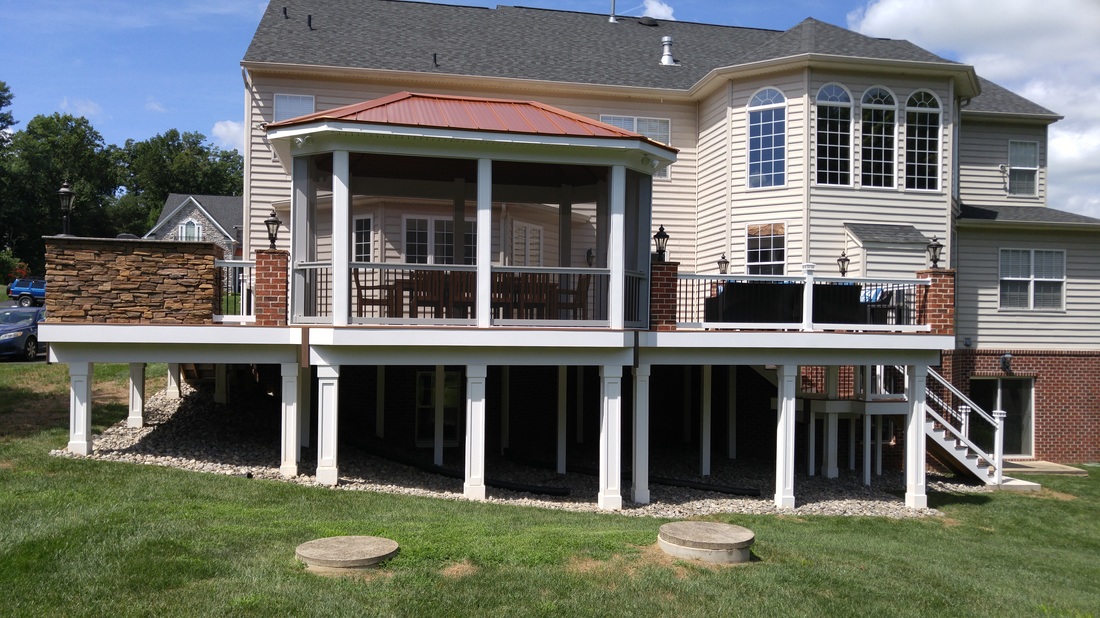
For a Model 100 screen room or a deck enclosure that stays open-air most of the year, decking is often the most practical floor. We are a Trex Pro Platinum builder, and our deck building page explains how we build the structure that sits under many of our rooms.
Indoor-outdoor carpet and rugs
Indoor-outdoor carpet and rugs add softness and warmth to a hard floor without committing the whole room to carpet.
- Pros: warmer and quieter, easy to change seasonally, outdoor-rated fibers resist mildew and fading better than standard indoor carpet.
- Cons: can hold moisture against the floor if it gets wet and does not dry, some fibers still fade in strong sun, and they need regular cleaning to stay fresh in a humid Maryland summer.
Wall-to-wall indoor carpet is generally a poor fit for screen and three-season rooms because of moisture and fading. Area rugs over tile or vinyl plank are an easy way to get comfort where you sit.
Sealed or finished concrete on a slab
When a room is built on a concrete patio or a new slab, the concrete itself can be the floor. It can be sealed, stained, or finished.
- Pros: very durable, handles moisture, inexpensive if the slab is already there and in good shape, easy to clean.
- Cons: cold and hard, can show existing cracks or stains, stains and some sealers can fade or need renewal in strong sun, and an old patio may not be level or may slope toward the house.
An existing patio slab also needs to be evaluated before a room goes on top of it. A slab that was poured for a patio may need work to support walls and a roof.
Matching the floor to the type of room
Screen rooms
A screen room is open to the air through the screens, so rain, pollen, and humidity reach the floor. Choose materials meant for outdoor exposure: composite decking, sealed concrete, or tile rated for outdoor use. Skip anything that can trap water or swell. Our screen rooms page covers the Model 100 in more detail.
Three-season rooms
Three-season rooms, like the Model 200 WeatherMaster and the Model 300, keep out weather and bugs when the windows are closed, but they are not insulated and are not comfortable in deep winter without heat. That means the floor still sees real temperature swings and some moisture. Tile, sunroom-rated vinyl plank, composite decking, and sealed concrete all work here. Add area rugs for comfort, and pick a vinyl product that is approved for unheated spaces. For more on how these rooms behave in Maryland, see our three-season room guide.
Four-season rooms
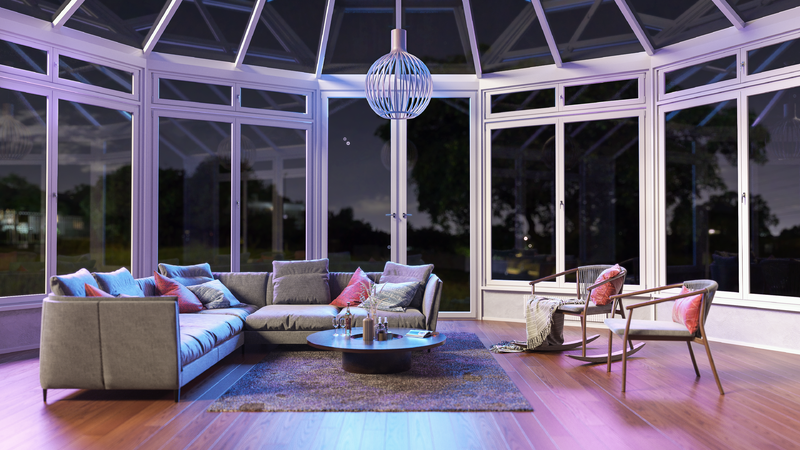
A Model 400 four-season room is insulated for year-round use with its own heating and cooling, so the floor lives in more stable conditions. That widens your choices to the floors you would consider inside the house, while still accounting for heavy sun. Tile and quality vinyl plank remain strong picks, and area rugs and indoor carpet become more practical. Composite decking is not a good fit for a heated room.
The insulated floor on the Model 400 and why floors matter for heat loss
People think about glass and walls when they think about heat loss, but the floor matters too. A room built over an open deck has cold air moving underneath it all winter. A room on a slab sits on ground and concrete that stay cold. Without insulation, that cold works its way up through the floor, and you feel it in your feet even when the air temperature is comfortable.
The Sunspace Model 400 is the insulated four-season room, with thermal walls, Low-E argon glass, thermal breaks in the frame, and an optional insulated floor. If you plan to use the room in January, the insulated floor is worth discussing. It helps the heating system do its job and makes the room feel more like part of the house. A heated four-season room on an uninsulated floor tends to feel cold at foot level and costs more to keep comfortable.
Our four-season room guide explains insulation, heating and cooling, and cost for the Model 400, and our insulated sunrooms page shows the room itself.
What sits under the floor matters most
The finish floor is the part you see, but the structure under it decides whether it lasts. A few points we look at on every job:
- A stiff, level structure. Tile cracks and vinyl plank separates on a floor that flexes or is out of level.
- Drainage and slope. An old patio that slopes toward the house or a deck with poor drainage can send water under the new room.
- Load capacity. A deck that is fine for chairs and a grill may not be built to carry walls, a roof, and snow. Our article on whether your deck can support a sunroom goes into this.
- Moisture from below. Floors over slabs and crawl spaces may need a moisture barrier, depending on the flooring and the site.
Because one company handles the footing or slab, the structure, the enclosure, and the finish work, the floor structure gets planned with the room, not as an afterthought.
Quick comparison
| Flooring | Sun fading | Moisture | Temperature swings | Comfort | Best fit |
|---|---|---|---|---|---|
| Porcelain or ceramic tile | Very resistant | Very resistant | Good with proper base | Cold and hard | All room types |
| Luxury vinyl plank | Varies by product | Resistant | Varies by product | Warmer, softer | Three-season and four-season |
| Composite decking | Built for outdoors | Built for outdoors | Built for outdoors | Outdoor feel | Screen and three-season |
| Indoor-outdoor carpet or rugs | Varies by fiber | Can hold water | Good | Warm, soft | Area rugs anywhere |
| Sealed or finished concrete | Finish may fade | Very resistant | Good | Cold and hard | Rooms on a slab |
Planning your sunroom and its floor
Flooring is one of many choices that shape how a room feels and how it holds up. If you are early in the process, our guide to sunrooms, three-season rooms, and screen rooms can help you pick the right type of room first, and the floor decision follows from that.
Here is how we work with you:
- A free phone conversation. Tell us how you plan to use the room. We give you a price bracket on that first call.
- A one-hour on-site visit. We look at your deck, patio, or porch and what is under it, and we bring samples and colors.
- A to-the-penny written proposal. You get a final number for the full scope.
You can also check typical ranges with our sunroom pricing calculator. Call 443-616-1459 or start a conversation. Let's talk about your outdoor space.
Frequently asked questions
What is the best flooring for a three-season room?
Porcelain or ceramic tile, luxury vinyl plank that is approved for unheated spaces and direct sun, composite decking, and sealed concrete all work well. A three-season room sees temperature swings and some moisture, so pick a material that handles both.
Can I use hardwood in a sunroom?
Solid wood is sensitive to sun fading, moisture, and temperature swings, so it is a risky choice in screen and three-season rooms. In an insulated four-season room with its own heating and cooling, conditions are more stable, but heavy sun can still fade wood. Most homeowners choose tile or vinyl plank with a wood look instead.
Does luxury vinyl plank fade in a sunroom?
It can. Some vinyl plank products are not rated for direct sun or large temperature swings and may fade, expand, or gap. Check the manufacturer's instructions and warranty for sunroom and unheated use before you buy.
Do I need an insulated floor in my sunroom?
If you plan to use the room year-round, it is worth considering. The Sunspace Model 400 four-season room offers an optional insulated floor, which helps keep cold from coming up through the floor in winter. Screen rooms and three-season rooms are not built for winter comfort, so an insulated floor matters less there.
Can my existing deck boards stay as the sunroom floor?
In a screen room or three-season room, decking often stays as the floor, as long as the deck is sound and can carry the room. In a heated four-season room, decking is not a good finish floor because of drafts through the gaps.